Thursday, February 08, 2007

Panel - Central Asian Studies in light of Imperialism: A Neo-Orientalist Approach within Western Academia

Panel - Central Asian Studies in light of Imperialism: A Neo-Orientalist Approach within Western Academia

The 2007 CESS conference at the University of Washington
October 18-21, 2007 in Seattle, Washington
http://cess.fas.harvard.edu/CESS_Conference.html


Dear all,

We are in the process of organizing a panel entitled: Central Asian Studies in light of Imperialism: A Neo-Orientalist Approach within Western Academia

In the work, Orientalism, Edward W. Said elaborates on the idea behind Middle Eastern studies in Western academia. Said is interested in questioning the discourse of Orientalists, and furthermore, claims that the actual purpose of Middle Eastern Studies is not academic, but rather a policy-oriented approach that facilitates imperialism and colonialism. In this context Said argues that Europeans referred to the Eastern world as the ‘Orient’, a term that has only a vague meaning. Today, the region historically known as Turkistan has similarly been renamed ‘Central Asia’ in the context of the Neo-Orientalist process in policy oriented academia. In this field, some of the so-called “scholars,” working with policy-based institutions such as think-tanks, governmental and “non governmental” entities are the forefront of this approach, within the framework of imperialism and exploitation. These institutions, including think-tanks and non-governmental interest groups operate as a bridge between academia and the policy-oriented world. Additionally, academia has become a facilitator of an exploitative process towards Turkistan. The same process has been observed in Middle Eastern Studies for over a half century.

Today, the best example of this Neo-Orientalist or Colonialist approach can be found within the discipline of Central Asian studies within the U.S., and its relation with think-tanks, governmental, and non-governmental organizations. Thus, academia has been losing its objectivity, transforming from C. Wright Mills’ conception of the sociological imagination, to a facilitator of imperialism. This is occurring through its implicit representation of political interests. We can see this destructive trend taking place within Uyghur, Kazakh, Kyrgyz, Uzbek, and Turkmen studies.

We welcome submissions related to Neo-Orientalism and Central Asian Studies, and also including the following:

• Neo-Orientalism and Central Asian Studies,
Imperialism, think-tanks and Central Asia,
• Role of SOROS, National Democratic Institute, the Woodrow Wilson Center, Carnegie Endowment and US Helsinki Commission on Central Asia,
• Colorful revolutions and imperialism/exploitation of the market,
Sultan Galiev and Imperialism in Turkistan

Deadline: APRIL 3, 2007

Please send abstract to: tugrulk@vt.edu or rhaija@vt.edu

Tugrul Keskin

Rammy Haija

Virginia Polytechnic Institute and State University
Department of Sociology

Thursday, January 25, 2007

SSS 2007 Annual Meeting- Islam, the Sociology of Islam, and Islamist Movements


The 2007 Annual Meeting of the Southern Sociological Society

http://www.msstate.edu/org/sss/07Meet/Publish/

April 11-14, 2007, Atlanta, GA


"Islam, the Sociology of Islam, and Islamist Movements"


Organizers:

Tugrul Keskin keskintx@jmu.edu Virginia Tech. University
or
Dr. Dale Wimberley dale.wimberley@vt.edu Virginia Tech. Univer
sity


FIRST PANEL: ISLAM, IMPERIALISM AND COLONIALISM


CHAIR -Dr. Dale Wimberley -Virginia Polytechnic Institute and State University

Discussant -Dr. Kemal Silay -Indiana University, Bloomington


(1) Islam and Terrorism: Reason and Assessment

Dr. Mohamed El-Attar -Department of Sociology - Mississippi State University - USA

(2) The Traditional Islam versus Western Based Islam in the Framework of Transnational Movement: As a case of Fethullah Gulen “Islamist” Movement in Turkey

Tugrul Keskin -Sociology - Virginia Polytechnic Institute and State University - USA

(3) Uncivilized Christianity, Decolonized Islam: Evading Conflict through Dialogue

Darrell Ezell -Graduate Institute for Theology & Religion - University of Birmingham - England

(4) The Local Contexts of Islam

Dr. Ejder Okumus - Dicle University - Divinity Faculty - Turkey


SECOND PANEL: ISLAM. MODERNITY AND CIVIL SOCIETY


CHAIR - Tugrul Keskin -Virginia Polytechnic Institute and State University

Discussant - Dr. Stephen Poulson -James Madison University


(1) The Liberation Theology of Ali Shariati

David L. Reznik -Department of Sociology - University of Florida - USA

2) Possibilities of a more Plural Society

Salim Cevik - Political Science - Bilkent University - Turkey

(3) Islamic Civil Society

Jeremy Walton -Department of Anthropology - University of Chicago - USA

(4) Islam and the Problem of Participation in the Contemporary Situation

Dr. Ejder Okumus -Dicle University - Divinity Faculty - Turkey


THIRD PANEL: ISLAM THE MIDDLE EAST AND EURASIA


CHAIR - Dr. Dale Wimberley -Virginia Polytechnic Institute and State University

Discussant - Dr. Birol Yesilada -Portland State University


(1) Islamic Dissent De/Remobilization: Egypt and Syria

Feriha PEREKLI -Department of Near Eastern Languages and Cultures - Indiana university-Bloomington USA

(2) Bedouin issues in both Israel/Palestine and in Egypt

Dr. Jesse Benjamin -Department of Sociology - Kennesaw State University - USA

(3) Reviving of Social Justice Concept in the Post-Modern World: An Islamic Alternative

Fuad Aliyev -Center of Economic Reforms - Baku, Azerbaijan Republic Azerbaijan

(4) Towards a Sociological Understanding of Islamophobia

Robert Heck -Sociology - University of Florida


FOURTH PANEL: ISLAM AND ISLAMIST MOVEMENTS


CHAIR - Dr. Michael Hughes - Virginia Polytechnic Institute and State University

Discussant - Dr. Stephen Poulson -James Madison University


(1) Islam and Modernity: Islamist Movements and the Politics of Position

Dr. Said Mentak -Department of English, Oujda - Morocco

(2) The Nation of Islam and Womanhood

Dr. Toni Y. Sims -Assistant Professor -Sociology & Anthropology Department - University of Louisiana Lafayette - USA

(3) Islamic Sociology in Iran

Dr. Taghi Azadarmaki -Department of Sociology - The University of Tehran - Iran

(4) Cartoons of Prophet Muhammad and the need for an Islamic “Protestantism”

Dr. Fadil Maloku -Globalization and Civilizations - University of Kosovo - Kosova


FIFTH PANEL : ISLAM AND POLITICS


CHAIR - Dr. Judith Blau -University of North Carolina Chapel Hill

Discussant - Dr. Dale Wimberley -Virginia Polytechnic Institute and State University


(1) Student Engagement with Contemporary Islamic Social Movements through Existentialist Thought

Dylan Wittkower -Department of Philosophy - Virginia Polytechnic Institute and State University - USA

(2) Islamic Authority and Knowledge in Europe: The case of Revolutionary Islamist Kaplan Community

Dr. Ahmet Yukleyen -Sociology and Anthropology Dept - University of Mississippi - USA

(3) The Use of Strategic Violence among Social Movements in Middle East:

Examples from Iraq, Lebanon and Palestine

Dr. Stephen Poulson -Department of Sociology & Anthropology - James Madison University - USA

(4) Headscarf: As a Political Symbol or As a Demand of Freedom?

Meryem Atlas and Merve Kutuk -Political Science - Bilgi University - Istanbul/Turkey

Wednesday, September 20, 2006

Panel – Islam, Sociology of Islam and Islamist Movements


The 2007 Annual Meeting of the Southern Sociological Society

http://www.msstate.edu/org/sss/07Meet/Publish/

April 11-14, 2007, Atlanta, GA


Invitation for Panel Papers

Today, Islam is a belief system that represents one-fifth
of the World’s population located from Morocco to Indonesia,
and one of the world’s fastest growing religions. The
contribution of Islam to world civilization is undeniable,
however in the last one hundreds years, Muslims have been
faced with economic underdevelopment, dictatorship and
antidemocratic regimes, and most importantly, modernity.
What does modernity mean for Muslims? Will there be an
Islamic renaissance? How about an Islamic reformation?

On the other hand, Islam is not just a religion, it is also
likely to manifest itself as a social, economic and political
structure; therefore, one must understand the socio-historical
background and origin of the Islamic belief system, as well as
its underpinning theoretical thinkers and Islamist Social Movements.

We would like to organize a panel entitled, "Islam, the Sociology
of Islam, and Islamist Movements
" and we welcome submissions
related to the subject, but not limited to the following:

Islam and Modernity,
De-secularization Process in the Muslim Populated Countries,
Islamist Movements and Collective identity,
Islam/Alternative Globalization versus Western Based Weberian Capitalist Globalization
Islam and Imperialism/Colonialism/Orientalism


Deadline: DECEMBER 12, 2006


Please send abstract to:

Tugrul Keskin keskintx@jmu.edu James Madison University
or
Dr. Dale Wimberley dale.wimberley@vt.edu Virginia Tech. University

Tuesday, September 12, 2006

Central Eurasian Studies Society Seventh Annual Conference (2006)

Central Eurasian Studies Society

Seventh Annual Conference (2006)
September 28-October 1, 2006
University of Michigan, Ann Arbor, Michigan, U.S.A.


Friday, September 29, 9:00-10:45

Domestic Politics in the South Caucasus

CESS 2006 Program

Harutyunyan Arus Organizer Domestic Politics in the South Caucasus

Keskin Tugrul (Chair)
Virginia Polytechnic Institute &
State University and James Madison University, Virginia tugrulk(at)vt.edu

Ledsky C. Nelson (Discussant)
National Democratic Institute for
International Affairs Nelson(at)ndi.org

Harutyunyan Arus
Western Michigan University arus.harutyunyan(at)wmich.edu
Estimating National Identity via Positional Method: Comparing Party Manifestos and Policy Positions in Armenia from 1994-2005

Tuite Kevin
University of Montreal kj.tuite(at)umontreal.ca The Georgian banquet as sociopolitical microcosm

Bravo E. Karen
Indiana University kbravo(at)iupui.edu
Smoke, Mirrors and the Joker in the Pack? On Transitioning to Democracy and the Rule of Law in Post-Soviet Armenia

Khachatrian Haroutiun
Noyan Tapan Information and Analysis Center har(at)noyan-tapan.am
Economic Policy of South Caucasus Countries:Differences of Strategy


Saturday, September 30, 11:00-12:45
The Future of Uyghur Nationalism in Turkistan/Central Asia

Keskin Tugrul (Organizer)
Virginia Tech. University tugrulk(at)vt.edu
The Future of Uyghur Nationalism in Turkistan/Central Asia

Keskingoren Tugrul (Chair)
Virginia Tech. Univesity tugrulk(at)vt.edu


Wimberley Dale
(Discussant)
Virginia Tech. University dale.wimberley(at)vt.edu

Dwyer Arienne M.
University of Kansas anthlinguist(at)ku.edu
Nationalism one word at a time: language purification in the Uyghur exile community

Thwaites Dilber Kahraman
The Australian National University dilber(at)thwaites.com.au or Women of Power in Uyghur Arts and Literature

Klimes Ondrej

Charles University ondrejklimes(at)email.cz
Creating Modern Uyghur Identity - Adoption of Soviet Ethnic Policy

Thum Rian R.
Harvard University thum(at)fas.harvard.edu
The Apaq Khoja Shrine in Uyghur Historical Discourse

Tuesday, August 01, 2006

Qana Massacre July 30, 2006


"Those that know the "real" history of the Middle East are not shocked with the recent tragic deaths of so many innocent people. They know that this episode, along with so many other atrocities will soon be forgotten. It is the nature of things that it is always the winners and the powerful that write the history. The weak and the conquered are always the ones that are blamed for all the misfortune that has befallen them."

"The Day after Qana Massacre: Who Cares?"

By Dr. Abbas Bakhtiar

Sunday, June 04, 2006

Marxism and Gramsci


Antonio Gramsci (1891-1937)

Tugrul Keskin

Gramsci’s most notable contribution to Marxist theory is his conceptualization of hegemony. While he borrowed the term from Lenin and a number of other Russian Marxists, he formed it into a theoretical framework for examining and explaining relations of power in society. He conceptualized hegemony as domination by a combination of permission and coercion through ideological and political leadership, existing within the relationship between classes and other autonomous social forces. By autonomous social forces, he means the social forces that exist autonomously of economic relations, which is one of the fundamental divergent points from Marx.

For Gramsci, history can not simply be reduced to ‘economism’, which is term he used in reference to Marx’s economic determinism, or historical materialism. Marx’s reductionist argument systematic removes the socio-cultural, or national-popular, sphere of relations that exist outside of the realm of production. That is, the social forces that are related fundamentally to freedom, human rights, democracy, such as nationalism, patriotism, race, ethnic, and gender relations. These autonomous social relations can not be incorporated into ‘economism’ unless they are reduced to mere products of the economic, which should be apparent to most as an oversimplification. Rather, Gramsci suggests these cultural elements lie outside the realm of economic relations and, therefore, must be examined as an autonomous sphere of social relations. Whereas Marx examines exploitation, Gramsci examines coercion and consent as relations of power, which is engrained in everyday life.

A historic bloc arises when the hegemonic class creates strong alliances within and among different classes and social forces, i.e. a bloc of society. History can be observed through the transition of historic blocs, the rise and fall of hegemonic classes.

Hegemony, through relations of power, produces a hegemonic class. Once it becomes hegemonic, culminating in a historic bloc, it must strive to maintain its position. At different historical stages, the hegemony of the capitalist class can become unstable due to contradictions in the economic structure and/or loss its ideological influence among its alliances, which leads to, what Gramsci called, an organic crisis.

Gramsci makes a distinction between civil society, political society, and the State. The State is simply an apparatus of power, not necessarily the source of power. He appears to refer to the anatomical apparatus, that is, a group or system of organs that work together to perform a specific function. The State is not simply political society; rather it is the embodiment of political society. Civil society is the sphere of all social relations; where classes organize consent and hegemony; and the sphere where class and national-popular struggles take place.

In short, Gramsci dealt with hegemonic power and cultural theory within historical bloc. His emphasis is less materialistic than Marx argued in his theory. Exploring Gramsci’s conception of hegemony, civil society, and ideology provides an approach for examining the State as fundamentally unstable structure; therefore, civil society plays the vital role in history and social change should come bottom to top.

If you are interested in Gramsci's Marxist theory, please take a look at the following homepage International Gramsci Society

Sunday, March 26, 2006

War in Iraq is a continuation of the past

War in Iraq is a continuation of the past

Tugrul Keskin

The Raging Liberal

In his article, the last exit from Iraq(1), Joel Rayburn
argues that the US is not the first country who occupied Iraq and suggests that the US should take a lesson from the British experience. In the context of his analogy, unfortunately it is accurate information; however, he forgets to include a historical analysis of British colonialism at the beginning of this century and its relationship with the American occupation of Iraq. The American occupation of Iraq is a continuation of British colonialism and today is a reflection of the past. Iraq is an artificial state; it has an artificial national identity based on territoriality, as established under British imperialism. However, if we look at the other countries in the region, most of these countries are not different than Iraq. There is no difference between Iraq and Syria, Kuwait and Saudi Arabia, Jordan and Lebanon. The differences between these countries are very similar to differences between Georgia and South Carolina or New York and Washington DC.

What are the causes of British colonialism and American occupation in Iraq? To me, there is a very simple answer to this question: divide and conquer; and exploit them as much as you can; make ethnic groups enemies to each other so that they can be used against each other and further exploited for Western-based capitalism.

The British occupied Iraq in order to weaken and divide the Ottoman Empire and to control its natural resources. Unfortunately, like everywhere else, some Arabs such as Sheik of Mecca and Medina, grand father of King Abdullah II of Jordan, Sharif Hussein Bin Ali(2) collaborated with the occupation forces and fought against their own people, like Iyad Allawi, the president of Iraq today. Lawrence of Arabia and the American colonel Noel were good friends of Hussein. However the first revolt against the Ottomans started in 1916 before the end of WWI, supported and financed by the British. There are many other small revolts that took place in the region between the late 1800 and 1938, such as the Kurdish revolts in 1886, 1924, 1929, 1936 and 1938; and other revolts such as that of the Greeks, Assyrians, Caldenians and Armenians (Christian minorities in the Ottoman territory) revolts.

Britain formed the Iraqi state in 1919 as a part of the League of Nations established under the British Mandate in 1920. Rayburn claims that the British occupation ended in 1932. Actually, the British occupation ended in 1947. In 1957, long before Saddam came to the power, General Kassim claimed that Kuwait is a part of Iraq as Saddam claimed in 1991; however, the British government warned General Kassim not to invade Kuwait. Soon after General Kassim’s claim, two important revolts erupted in Iraq, Kurdish revolt led by Molla Mustafa Barzani, the father of the current Kurdish leader Massoud Barzani, between 1961-63 and 1968-70. These two revolts were also supported and financed by the US and British governments. In 1979, Molla Mustafa Barzani died at the Georgetown hospital. His personal doctor stayed in the US and became a member of the Iraqi National Council led by Chalabi. Today, they are playing a big role in the current puppet government in Iraq.

Occupation is a simple method of imperialism and puppet governments play a key role in the process. Today, the American occupation of Iraq destabilizes the entire region as the British did at the beginning of this century. This process of war is in this sense a continuation of the past. What they have done in Africa and South East Asia is not different than what they are doing in Iraq today. Unfortunately today they have power, but the future will not be bright for all of us in the Middle East. According to American politics, I don’t see any difference between Kerry and Bush, Democrats or Republicans; they are both supportive of the Iraqi occupation in different way, they both want to remove Saddam from power. We should remember Joseph Lieberman who is very progressive “according to some people.” He also supported the war in Iraq. Additionally, presidential candidate John Kerry said that I have a plan for Iraq. One must ask the question of Kerry, regarding what this plan is and involves; killing less people, or using more oil?

Some people argue that the Bush administration has no plan before the occupation of Iraq; therefore, these people are against the Bush administration and criticize him for this reason. If George W. Bush had a plan then does this legitimize the occupation? It is a silly argument; we are talking about the exploitation and enslavement of people in Iraq and they are talking about a strategic plan. I think we live in different dimensions.

Today, to answer the question of why the US is in Iraq, the answer is simple: the exploitation of the Middle East. They use beautiful words, such as democracy, freedom, and human rights; but to me, a person who is coming from the region, I cannot take their definitions of these concepts seriously. To me, democracy, freedom and human rights are equal to exploitation and colonialism, because their understanding and definition of these terms are different than what these terms really mean. In short, Rayburn claims that the US should stay longer In Iraq in order build a stable government and society In comparison to this perspective, I would say quit Mesopotamia, quit Iraq, quit the Middle East, and leave the people alone.

In order to understand the occupation of Iraq today, I would rather suggest to you that you read two articles rather than wasting your time with Joel Rayburn’s argument. The first one is Graham Fuller’s article, Redrawing the World’s Borders(3). And the second article is Daniel Byman’s article, Let Iraq Collapse(4). Imagination is a projection of imperialism. In short, the best description of this war is hidden in Nayna Jhaveri’s article, Petroimperialism: US Oil interests and the Iraq War(5). You will likely enjoy reading the articles, and will find clear examples with which to observe imperialism.


1)Joel Rayburn, The last exit from Iraq, Foreign Affairs, New York: Mar/Apr 2006.Vol.85, Iss. 2; pg. 29.

2)http://www.kingabdullah.jo/homepage.php

3)Graham Fuller, Redrawing the World’s Borders, The World Policy Journal, Spring 1997.

4)Daniel Byman, Let Iraq Collapse, The National Interest, Fall 1996.

5)Nayna Jhaveri, Petroimperialism: US Oil interests and the Iraq War, Antipode, 2004.

Sunday, March 12, 2006

Panel-The Future of Uyghur Nationalism in Turkistan/Central Asia

The 2006 CESS conference at the University of Michigan http://cess.fas.harvard.edu/

Dear all,

We would like to organize a panel "The Future of Uyghur Nationalism in Turkistan (or Central Asia)" and we welcome submissions related to Uyghur Nationalism, but not limited to, the following:

1) Uyghur Nationalism in "Xinjiang" and China, 20th century,
2) Historical foundations of Uyghur Nationalism and Identity,
3) Uyghur Diaspora in Turkey, Europe and North America,
4) Future of Uyghur Nationalism and its impact on the US-China relations.

Deadline: APRIL 5, 2006

Please send abstract to:

Panel Organizer and moderator
Dr. Dale Wimberley and Tugrul Keskin

Department of Sociology
Virginia Polytechnic Institute & State University
560 McBryde Hall
Blacksburg, VA 24061-0137
(202)378-8606
Email: tugrulk@vt.edu

Tuesday, February 14, 2006

2nd International Conference on Business, Management and Economics

2nd International Conference on Business, Management and Economics
June 15-18, 2006
Yasar University
http://www.yasar.edu.tr


Altinyunus Resort Hotel/Convention Center
Cesme, Izmir/Turkey
http://www.altinyunus.com.tr/


Transnational Corporations (TNCs)

I invite your paper proposals on:

*Transnational Corporations
*Management systems of TNCs
* Global Political Economy
* Social and economic implications of TNCs
*The relation between developing countries and TNCs

I am organizing paper sessions on these topics for the upcoming 2nd International Conference on Business, Management and Economics in Cesme, Turkey, June 15-18, 2006.

Please send your abstract to tugrulk@vt.edu no later than April 23. Full paper submission May 15.

The conference website: http://conference2006.yasar.edu.tr/

You are cordially invited to the 2nd International Conference on Business, Management and Economics, which is going to be held in Izmir, Turkey between 15-18 June 2006.

We are honored to announce that Nobel Prize Winner in Economic Sciences, distinguished professor Thomas C. Schelling is going to present a special keynote address at the Second International Conference on Business, Management and Economics.

Saturday, February 04, 2006

Seventh Annual International Social Theory Consortium (ISTC) Conference

Theorizing Power in the post 9/11 World

May 18 – 21, 2006
The Hotel Roanoke & Conference Center
Roanoke, Virginia

Call for Papers

The Alliance of Social, Political, Ethical, and Cultural Thought (ASPECT) at Virginia Tech in partnership with the International Social Theory Consortium, (ISTC) will host the 7th Annual ISTC Conference May 18—21, 2006, in Roanoke, Virginia at The Hotel Roanoke & Conference Center.

The objective of this annual conference is to provide a forum for multidisciplinary dialogue between social theorists of all disciplines and occupations. The conference organizers invite paper and panel proposals from a variety of theoretical perspectives and intellectual traditions, and especially welcomes proposals that continue the Consortium’s dialogue among theorists working in the Global South and North. This conference also explicitly welcomes social activists engaged in transforming power relationships at various scales. As this year’s host, ASPECT is particularly interested in inviting panels that embrace in equal measure social, political, ethical and cultural theory in relationship to the conference theme.

Previous ISTC conferences have been hosted in Singapore, Toronto, Tampa, Dubrovnik, Sussex and Lexington, Kentucky.

Possible sub-themes to be addressed may include, but are not limited to the following.

1. New theorizations of power post 9/11
2. Classic theories of political, cultural, and social power
3. Geographical theorizations of power
4. Empire and its discontents
5. National and comparative perspectives on“race,” racialization, ethnicity and nativism
6. Cultural forms of neo-liberalism
7. Non-corporate and corporate models of globalization
8. Islam, Christianity and Judaism as forces for social justice
9. Technology, Science and Democracy
10. Analytic approaches to power and justice
11. Visualilty, media and representation
12. Memory and mourning
13. Theories and practices of civil society
14. Mediations of post 9/11 power: Race, Gender, Class
15. Militarism, war, and the disciplining of national bodies
16. Patriotism and class
17. Discourses on Inter-civilizational dialogues
18. Terror, torture, and human rights
19. Gender, sexuality and Critical Theory
20. Postcoloniality in an (ongoing) age of imperialism
21. Theorizing development and anti-development
22. Varieties of capitalism and anti-capitalisms
23. Global civil society and the ethics of place
24. Transnational social movements
25. Governance and governmentality
26. Radical, plural, and other varieties of democracy
27. Techno-nature
28. Health: Bio-ethics and bio-power
29. Demographies and cartographies of power
30. Immigration, citizenship and imagined national communities
31. Contemporary and historical perspectives on civic nationalism and patriotism
32. Constitutionalism and its institutions

Submission

Abstracts (between 150 and 200 words in length) for paper and panel
proposal should be submitted by February 15, 2006 to:

Professor Wolfgang Natter
E-MAIL: wnatter@vt.edu
Phone: 540.231.5342
FAX: 540-231-6078

MAIL:

7th ISTC Conference
ASPECT
531 Major Williams Hall (0130)
Virginia Tech
Blacksburg, VA 24061

For further inquiry, please contact:

Karen Jenkins
E-mail: karenjen@vt.edu
Telephone: 540-231-2839

All conference papers will receive consideration for inclusion in a publication containing the proceedings.

Registration*

Conference registration will be open early February 2006.

*Further registration information and web links will be made on this web-site prior to February 8, 2006.

Organized by the ASPECT Program, with the generous support of the College of Liberal Arts and Human Sciences, Virginia Tech

Thursday, January 19, 2006

How About a War on Poverty, Mr. President?

The Raging Liberal


Tugrul Keskin

In 1962, Edward Michael Harrington, an intellectual and activist, wrote an astonishing book, The Other America: Poverty in the US and his findings in this book shaped the views of American President Lyndon Johnson on poverty. On January 8, 1964, President Lyndon B. Johnson declared a War on Poverty in his State of the Union address. Johnson knew that the War on Poverty was the one of the key elements in the fight against radicalism and extremism, therefore, he made it very clear that the war was unconditional. Between 1964 and 1968, America attempted to eliminate poverty and used economic and political tactics and strategies to gain the support of the people and to rescue them from the most extreme poverty. However, these socio-economic and political strategies have not continued after he left the Presidency and ultimately the war on poverty has failed in urban and rural America, because another war mongering President came to the power in the White House; Richard Nixon. Unfortunately, today is not different than the past.

According to the Census Bureau report entitled, “Income, Poverty, and Health Insurance Coverage in the United States: 2003,” the percentage of Americans who live below the poverty level is 12.5% and the socio-economic gap between races and ethnic groups is stronger than ever. In the same report, there was a significant relationship shown between people’s ethnic origin and poverty levels. In 2002, the percentage of people who lived below the poverty level was 12.1%, but the poverty level for the total population in the US increased to 12.5% soon afterwards, in 2003. In the same Census Bureau report, it was recorded that 13.2 million people of Hispanic origin and 7.3 million African-Americans were living without health insurance. In total, 44.9 million people did not have health insurance in the US in 2003.

Poverty in the World may have different ways that it shows itself and more challenges to come. For instance, according to Global Policy Forum, Most African nations suffer from military dictatorships, corruption, civil unrest and war, underdevelopment and deep poverty. The UN Development Program report 2005 indicates that 34.8 million children will die in the next ten years and the same report also shows that poverty and inequality all over the world is a trend that has increased. The inequality level in Brazil is 59.3%, in Namibia it is 70.7%, Egypt 34.4%. In Pakistan, only 38% of all children will complete their primary education, because of poverty and the socio-economic depression.

Poverty is the cause of many of the social and political challenges that we face today. The social and political consequences are related with the economic gap that exists both between nations and within American society. The essence of the elimination of poverty from the socio-economic sphere is a key factor to shortening the gap between the rich and poor. However, as long as there is a wide gap between the upper and working classes, the Capitalist economy and America will continue to face ever-more challenges and crisis. As a result of poverty and the continuation of Colonialism because the power of trans-national corporations by the powerful West, developing nations will face new challenges such as religious fundamentalism; because the people and political stakeholders have nothing to lose but their identity.

Today, we have a different president and a different war than the one undertaken by President Johnson’s under his broad perspective. President Bush believes the war on terror will eliminate or at least minimize radicalism and this will prevent future attacks on America. It is absolutely wrong. As long as there is a gap between the rich and poor, and the socio-economic gap continues to exist between nations and within nations, and the idea of colonialization continues, unfortunately terrorism will survive; therefore, we must understand that terrorism is another ugly face and a further reflection of poverty.

Tuesday, October 25, 2005

Behind Closed Doors: Elite Politics, Think Tanks, and U.S. Foreign Policy

Tuğrul Keskin & Patrick R. Halpern

Insight Turkey

In the April-June 2005 Issue

Published by the Ankara Center for Turkish Policy Studies (ANKAM)

This paper aims to illuminate the role played by think tanks in the development of public policy and planning. Employing the framework provided by William G. Domhoff and Elite Theory, this paper explores the role of elites in the formulation of public policy in the United States through an understanding of the interplay between foundations, think tanks, and policy discussion groups. Using the current U.S. foreign policy agenda as an example, we will examine how think tanks are, ultimately, the mouthpiece for the promotion of elite interests in the policy planning process...

You will find the entire article at the following homepage: Insight Turkey

Saturday, September 10, 2005

The Philosophy of History, G.W. F. Hegel

Review of The Philosophy of History by Tugrul Keskin


Hegel attempts to elucidate his theory regarding the historical development of the human spirit. Hegel uses two levels of explanation for his approach; the level of individual self-consciousness, and the global level of human freedom. Hegel views reason as equal to God. He furthermore defines reason as “the infinite content, the very stuff of all essence and truth.” His lemmatic explanation of truth is based upon theological philosophy, and as such he believes there exists only one truth. On the other hand, some philosophers claim that there are multiple truths. One can argue that the truth may change from time to time, or from one condition to another. The truth of the oppressor and the truth of oppressed will represent different realities; they are different. The consciousness of freedom is the ultimate goal in the development of human freedom. Hegel implied that one cannot be free without God. However, he does not talk directly about God, he elaborates on the idea of reason, instead of God. For Hegel, God is reason, and spirit is the freedom of man or thought. According to Hegel, reason is an infinite power that represents God; therefore, reason has ruled the world. Hegel attempts to establish a link between the ‘final goal’ and reason, and ultimately finds the relationship between these two phenomenons within religious message.

Hegel writes that, “I am free when I exist independently, all by my self.” In this issue regarding the independence of human beings from despotic thought, Hegel is in conflict with himself, because on the one hand, what he desires is to free man from his dependences, on the other hand he brings man into the different dogmatic structure that is called religion. Religion is a dogmatic structure and conflicts with freedom.

Hegel employs a very conservative thought process in his approach to social action and structure. Accordingly, the realm of spirit is placed within a religious framework.

In the first chapter in the book, The Methods of History, Hegel employs the methodology of historical approach to the problem of human development. In “Reason in History,” he provides a definition for his basic argument regarding reason and its relationship to both infinite power and God. This analysis also involves spirit and its development in the context of human freedom, and the individual and his/her relationship to the state structure. In the chapter titled, “History in its development,” Hegel focuses on the larger picture, in which change is what leads to the perfectibility of human development. World history corresponds to the development of self-consciousness that brings with it “the development of Spirit’s consciousness of its freedom.” In Chapter 5, “The Geographical basis of history,” Hegel holds an ethnocentric perspective, which can be seen through his division of the world between the old and new world. In the last chapter, titled “The Division of history,” Hegel defines Europe as representing the absolute end of world history, in comparison to the East. In the Hegelian view, the East is only a relative term.

In short, the secularization process in Western Christian World cannot be understood without first examining Hegel’s argument regarding reason and spirit. Hegel’s ideas have influenced and shaped conservative social structures and philosophies. In the book, Hegel reminds us of the Weberian perspective of ethno-Christian centrism, in which religion is the center of reason and spirit. Hegel claims that man cannot be free unless he employs God’s will in his own life and freedom. It is interesting to see that in the Enlightenment of Europe, religion was a dominant factor even in the philosophical sense. For Hegel, universal truth is reason, more clearly it is God. On the other hand, perhaps a more useful perspective might view man as unable to be truly free, unless he dismisses God from public life, because religion is in fact a creation of the human mind. Humankind shouldn’t act as a slave of his own creation as is the case today. On the other hand, Hegelian philosphy is very similar to Abu Hamid al-Ghazali, Islamic thinker who lived in the 12th century.

Wednesday, July 13, 2005

Islamism as a reactionary identity

Tugrul Keskin

The Raging Liberal

September 13, 2005

The purpose of this article is to achieve an understanding of the cultural, economic, and political roots of the increasing trend of religious movements. Particularly one must reach an understanding of Islamic revivalism after the 1980's. There is a direct correlation between religious movements and poverty. Afghanistan, Pakistan, Iran, Algeria, Turkey, Indonesia, and Egypt have been faced with extremist religious violence since the end of the 1980s. All of these countries also confront economic problems. Economic difficulties have created the gap between rich and poor in these specific countries. Moreover, the unemployment rate has increased dramatically in the last ten years. Education levels have decreased, and foreign investments eliminated the local and traditional work force.

Additionally, globalization has produced a public sphere in which people encounter other cultures. People in these countries are beginning to define their identity by looking at the cultures of the West. This environment has shaped and formed their identity. On the subject Huntington wrote, "while Asians became increasingly assertive as a result of economic development, Muslims in massive numbers were simultaneously turning toward Islam as a source of identity, meaning, stability, legitimacy, development, power, and hope, hope epitomized in the slogan "Islam is the solution." (Huntington, 1997)

People tried to create a cultural, economic and political ideology within the Islamic sphere in reaction to these forces of globalization. As a result of this, Islam becomes an ideology not a religion. Religious fundamentalism is benefiting from this trend. On the other side of this issue, are Western values conflicting with Islam? The question is whether Islam is compatible with democracy. Islam becomes the cultural defense mechanism. Today, in these countries cultural changes are taking place rapidly. But these rapid changes are forming a reactive type of cultural change rather than natural way. Inglehart claims, "cultural change seems to be path dependent. Economic development tends to bring pervasive cultural changes, but the fact that a society was historically shaped by Protestantism, Confucianism or Islam leaves a cultural heritage with enduring effects that influence subsequent development". (Inglehart and Baker, 2000)

The discourse of the conflict is not just based on economic and political differences, but also on cultural differences. Cultural imperialism has also influenced this conflict, because cultural imperialism is a result of the global capitalism. Moreover, Ritzer asserts that "…McDonaldization affects not only the restaurant business, but also education, work, health care, travel, leisure, dieting, politics, the family, and virtually every other aspect of society. McDonaldization has shown every sign of being an exorable process by sweeping through seemingly impervious institutions and parts of the world. (Ritzer, 1996). Tomlinson point out that cultural imperialism is a critique of global capitalism. (Tomlinson, 1992)

According to M. Hakan Yavuz, in his book, Islamic Political Identity in Turkey, the rise of Islamic social movements since the 1980's can be attributed to the tension created by neo-liberal economic policies. Yavuz describes this politicization as a rise of network communities that arose in reaction to and in order to cope with the modern urban conditions of fragmentation and anomie. As the secular nation state created systems of control and standardization, there was an ideological vacuum that was left. Muslims sought to carve out Islamic niches in the public sphere, free from secular state control. Social groups have also used Islam in order to make identity claims and justify entry into political and economic spheres as a result of the politicization of Islamic identity.

The most famous critical author of globalization, Edward Said sees cultural imperialism as an Orientalism that Western countries use to colonize the East and dominate them culturally. He later claims that this environment will have a huge impact on the Eastern societies. There will not only be an economic effect, but also cultural and political consequences will occur in the long term. (Said, 1993)

According to author Jan Nederven Pieterse, there are four currents or forms of collective action that relate specifically to globalization. First there is anti-globalization, then alternative globalization, global reform, and quiet encroachment. For the purpose of this study, his definition of anti-globalization is relevant to the current topic. In particular, Pieterse explores the effects of rapid globalization on populations that are exposed to new global forces, which result in insecurity in people's livelihoods and social realities. Some populations are unprepared to be exposed fully to the effects of globalization and react to it as an enemy force. The author describes this in the following way, "In anti-globalization discourse, globalization is portrayed as an alien juggernaut, a hostile, uncontrolled force" (Pieterse, 31). This view is fed mainly be fear and uncertainty, and its proponents often also hold strong views in opposition to imperialism, neocolonialism and Western capitalism.

Political Islam may be considered as one expression of anti-globalization. Political Islam represents an entire world-view that exists in opposition to globalization with its own historical and geographic arena, its own law, economics, and social policy, science and culture/identity. Political Islam has arisen in reaction to forces of globalization, and created its own structures of meaning in direct opposition to those of globalization and homogeneity. This has taken place according to Pieterse, as a result of anger in the Islamic world over Western double standards and political and social hegemony.

In short, the classical social theorist Mead claims "people's minds and their conceptions of themselves are shaped by their social experiences." (Ritzer, 1996). The social experience has changed dramatically in the Islamic world for the last 20 years. Therefore, religious fanaticism is a result of economic, cultural and political domination by the powerful West.

References:

Huntington, Samuel. 1997.The Clash of Civilizations: Remaking of World Order. New York, NY: Touchstone.

Inglehart, Ronald and Wayne E. Baker. Modernization's Challenge to Traditional Values: Who's Afraid of Ronald McDonald? The Futurist (Magazine/Journal), March 1, 2001.

Pierre Hamel, Henri Lustiger-Thaler and Jan Nederveen Pieterse, eds., 2001. Globalizationad and Social Movements. New York, NY: Palgrave.

Ritzer, George. 1996. Classical Sociological Theory. New York, NY: McGraw-Hill.

Said, Edward W.1993. Culture and Imperialism. New York, NY: Vintage.

Tomlinson, John. 1992. Cultural Imperialism. Baltimore, MD: The Johns Hopkins University Press.

Yavuz, Hakan M. 2003. Islamic Political Identity in Turkey. New York, NY: Oxford University Press.

Tuesday, June 14, 2005

AUTHORITARIAN DEMOCRACY

Armenian News Network / Groong

http://www.groong.com/

Review & Outlook - 06/14/2005


AUTHORITARIAN DEMOCRACY

Armenian News Network / Groong
June 14, 2005

By Tugrul Keskin


We have been experiencing so-called democratic revolutions
around the world today. These opposition movements from the
Caucasus to Central Asia, from Iraq to Ukraine, are toppling
the old regimes and their state structures. Inexperienced
opposition movements and their leaders are taking over the
state and have continued to control the entire society on behalf
of democracy in the Ukraine, Kyrgyzstan, Georgia, Iraq,
Lebanon and many more countries both now, and more to come[1].
However, no one questions the social nature of the democratic
ideas contained in these opposition movements. Where are they
emerging from,and what exactly do they attempt to achieve? Is
the problem in these countries really democracy, or perhaps
instead the exploitation of the market and natural resources
through the use of these so-called democratic movements. The
purpose of these movements is not really democracy, but use of
political goals to achieve economic means.

The process of colonialization involves many different stages
that take place within different historical time periods. As
part of this, both political and economic methods are used as
tools in these stages of its development. For instance, the
cultural, political and economic occupation of Sri Lanka and
India in the 18th century, or similarly the method of `divide
and rule' in Africa was undoubtedly similar to today's tragedy
in Central Asia and the Middle East. As Franz Fanon points out
in his book describing this dynamic, titled `Blacks Skin, White
Masks,' [2] democracy is a mask used as exploitation by the
powerful. We have been witnessing the neo-colonialization process
by colonialist powers and Trans National Corporations (TNC) in
the context of the so-called democratic structure and movements.
The meaning and the real notion of democracy have changed, and
today democracy and civil society are part and parcel in a
process that serves the interests of the powerful, rather than
creating freedom and equality within modern society. Freedom,
free speech and civil society are the true nature and
characteristics of a democracy; however replacing dictators
with puppets will not bring democracy and solve the
socio-economic issues for these underdeveloped and developing
nations, but will only serve to sustain further relationships
of exploitation.

The recent cases of the Ukraine, Kyrgyzstan, Georgia, and Iraq
have shown us that old and corrupt, anti-democratic regimes
cannot survive by disregarding the people's democratic demands
and sustaining economic equality. On the other hand, the
opposition movements of Ukraine, Kyrgyzstan, Georgia, and Iraq
stepped up and demanded more democracy supported by other
exploiters. A dichotomous situation for a so-called democracy.

In contrast to the argument of some scholars, democracy is
actually a very vague term that is defined in the context of
cultural parameters rather than within a universal pop-culture.
Democracy in Iran may be exercised differently than that of
Western Europe, because there exists in Iran a unique cultural
and historical development of democratic structure and
institutions and socio-economic paradigms that are specific to
the Iranian context. Therefore, we must define and understand
the democratic ideal within its appropriate cultural context.
Democracy does not serve the interests of TNCs, but that of the
people in these countries. Yet, today some neo-liberal scholars
argue that the meaning of `democratic' openness has transformed
into a description of democracy as a political approach that is
unable to survive without the free market. However, the state
structure in developing countries has become dispersed and
polarized by NGOs and their financiers, the TNCs. The state has
been weakened in this way and has lost control over the society
in favor of the interests of the elite or petit bourgeois. For
the TNCs, in order to sell more products, the state structure
should be weakened and tariffs should be abolished for their
own good, not for the good of the people of these countries.
This was the beginning of the decreasing power of the nation
state regarding the neo-liberal capitalist policies. According
to some views, such as those of Thomas Friedman, foreign direct
investment (FDI) and free market capitalism bring more
opportunities and democracy to the underdeveloped and
developing nations. In reality, FDI has not brought freedom to
the developing nations, but has produced an environment
in which there results cheap labor, the existence
of workers without unions, socio-economic chaos, more debt
to the IMF and World Bank, and last but not least, meaningless
independence and sovereignty. There has been an increase in the
power of the nation-state and national borders in the developed
nations, whereas the economic, cultural and political borders of
developing countries have been weakened. Moreover, invisible
borders and the diminishing power of nation state in the
developing nations have generated socio-economic anarchy and
chaos for these nations.

In the context of imperialism and neocolonialism, democracy
cannot be imposed on nations from the `outside.' In his book,
`Democracy in America [3]' Alexis DeTocqueville argues that
American democracy has been developed and constructed within
a democratic societal and state structure, which is by the
people for the people. It took a long time to build and
construct American democracy and the free institutions and
democratic behavior that support this. This was influenced
by the ideas of freedom and equality. Some other scholars
argue that American democracy has developed just within the
last two hundred years. If this is the case for the development
of the democratic process in America, then one must argue that
it will take a long time to build democracy and to shape a
civil society in countries such as Iraq or Kyrgyzstan. Most
importantly, Americans built their democratic state after they
received their independence from England. Democracy was not
begun under British colonialist rule because democracy cannot
be exercised under military or `civil' occupation. Each is
examples of the occupation of both mind and culture and
prevents democratic political organization and idea of civil
society.

It is important to note that the next colorful revolution may
take place in the Caucasus region. The case of Azerbaijan in
the context of democratic struggle is also a good example of
and reflects the power struggle between the puppets of
colonialism (so-called democratic opposition movements) and
the authoritarian state structure. This conflict will have a
considerable impact on the region, because colonialists do not
discriminate between the exploitation of either Armenia or
Azerbaijan. How do you define democracy within this class
of power struggle?

Democracy is neither a product of pop-culture nor exercised by
colonialist powers. Colonialism cannot be the watchdog for any
democratic structure and ideas, because the power holders'
economic interests overlap with anti-democratic movements and
paramilitary organizations, as we have seen in Latin and Central
America. In this sense, how can colonialism protect the real
nature of a democracy, when the `black skin white masks'
attempt to sell their products or to exploit the countries they
have occupied? It is a dichotomic process. We are within a
certain historical stage of human development; therefore in order
to improve our society and to continue along this path of social
and economic achievement, we cannot live without democracy.


NOTES:

1 http://www.whitehouse.gov/news/releases/2005/05/20050527.html
2 Franz Fanon, Black Skin White Masks
3 Alexis DeTocqueville, Democracy in America


--
Tugrul Keskin is a Ph.D. Candidate and Graduate
Teaching Assistant at Virginia Polytechnic Institute and State
University, Department of Sociology. He may be reached at
tugrulk@vt.edu

Redistribution of Groong articles, such as this one,
to any other media, including but not limited to other
mailing lists and Usenet bulletin boards, is strictly
prohibited without prior written consent from Groong's
Administrator.
© Copyright 2005 Armenian News Network/Groong.
All Rights Reserved.

Monday, June 13, 2005

Book Review: Irving M. Zeitlin, Ideology and the Development of Sociological Theory

Irving M. Zeitlin, Ideology and the Development of Sociological Theory(6th Ed.)

Tugrul Keskin

In this article, I will review Irving M. Zeitlin’s work of Sociological Theory. Zeitlin is a sociologist from University of Toronto. His book, Ideology and the Development of Sociological Theory, has been published 7 times. His approach is clearly unique and unlike that of other Sociological theory text books in American universities. The book has a much stronger social theory approach, than the more limited perspectives based just on theory. This book reminds us of the European viewpoint of Sociological theory; therefore Zeitlin uses the term “Enlightenment” as the starting point of his approach to social theory, because he refers to Enlightenment as “the intellectual movement that developed within the hundred-year span beginning with English Revolution and culminating with the French Revolution.” Enlightenment is a departure point in the origin of sociological theory. Many Sociologists agree with Zetlin’s view.

Zeitlin intends to explain Sociological Theory from the Marxist perspective and he sees Sociological theory as a combination of both Political and Social Theory. He did not have clear definition of social theory as its own field of inquiry in an independent sense; and does not distinguish between sociological ad political theories. Zeitlin attempted to combine Enlightenment with the Marxian legacy in the context of Social theory. At the time of the Enlightenment, Europe was under the influence and largely the control of religious fanatics in Europe, and Zeitlin traces Sociological theory from the philosophical foundation provided by the Enlightenment. According to him, sociology is science of critique. He makes reference often to British and French social thinkers, and hence, began his book with theoretical points from Montesquieu, Rousseau and Saint Simon.

During the last decade, there have been many publications on Sociological theory, and most of them have their own unique perspective. Each scholar who works and writes on Sociological theory tries to put his or her own ideological background and perspective into his or her writings. Zeitlin’s methodology is also different than the methodology contained in other social theory textbooks, specifically his historical methodology.

The book contains four main Chapters, and each of them supports and expands further on his approach to social theory. Marxist theory is the central argument and starting point of the book, and most of the social theorists that are referenced are either Marxist or socialist thinkers. Zeitlin uses Marxist theory to construct his sociological ideas. There are four different categories of sociological theory; Enlightenment, Post-Revolutionary Thought, The Marxian Watershed, and The Debate with Marx’s Ghost.

One of the most important points of this book is that Zeitlin gave great attention in his work to the thoughts of women social theorists, unlike most other writers. It is not common in the social theory literature to find such as attention to women theorists and social thinkers and in many cases women are not referred to at all.

In the first Chapter, he refers to Mary Wollstonecraft as “a true child of the Enlightenment.” Mary Wollstonecraft’s work is also important in the context of women rights in the 17th century so it is significant that he takes the work into account, within its historical context.

The other central figures in his book include Saint Simon, the utopian French Socialist and social thinker. Zeitlin views Marx’s theory as originating from the influence of Simon’s work. Thinkers and philosophers in Zeitlin’s book, such as Montesquieu, Rousseau, Saint Simon, Alexis de Tocqueville, Pareto and Mosca are more related with political theory than with sociological theory but are given strong preference in Zeitlin’s theoretical framework. As we have mentioned before, he does not have clear definition of sociological theory, therefore combines the works of both political and social theorists. Another key thinker made reference to in Zetlin’s book is Saint Simon. If we compare Zetlin’s work with that of other social theory textbooks, we would not be able to see much influence from Saint Simon’s theories in their work. However, Zeitlin provided an entire chapter on Simon’s ideas, and the part his work played in influencing Enlightenment thinkers in the 19th century.

For Zeitlin, the philosophy of intellectual movements is one ideological foundation of Marxism. Enlightenment created an environment that resulted in a change in the social structure of Europe. There was a revolution in human thought, which at the time was the most important factor that contributed towards moving forward in human history and the development of intellectual thought.

In Zeitlin’s view, the reaction against Enlightenment, particularly in reference to the revolution is a conservative and non-progressive event in history. These conservative thinkers that were against the revolution, sought to discontinue the secularization process in Europe. According to Zeitlin, secularization was an inevitable event of ‘bridge’ in human history which worked towards the collective good. In c7, Zeitlin provides historical details of the secularization process in Europe. He perceives the process as an escape from the darkness of religious authorities. In the same Chapter, Zeitlin concludes that there are two different types of philosophy and sociology; the conservative and the revolutionist types or strains. He categorizes Burke, Hegel, Bonald and Maistre as conservative thinkers.

In Chapter 8, Zeitlin introduces both Saint Simon and Comte as official founders of sociology. In most of the book, he distinguishes between conservative and progressive social thinkers. Zeitlin obviously shows that he takes the side of the Marxist view, and regards this as the progressive strain of social thought. From the beginning of the book to the end, he provides a Marxist perspective, and then throughout tries to find support for these view from many different social thinkers.

According to Zeitlin, Alexis de Tocqueville is “one of the most important social and political theorists of the nineteenth century,” because Tocqueville emphasizes two important revolutions and he wrote of them as critical factors of social transformation. The first one is a democratic revolution and the other an industrial revolution.

Zeitlin argues that John Stuart Mill, English philosopher, was greatly influenced by Harriet Taylor who was “one of the major figures who shaped the thinking of the later Victorian era.” According to Zeitlin, in Chapter 12, John Stuart Mill’s concern was the relationship of government to liberty.

In Chapter 13, Zeitlin talks about Marx and his philosophical orientation and in Chapter 14, continues on to have a discussion about Marx’s relation with Hegel and Feuerbach, and the way that both thinkers influenced Marxist theory. Zeitlin states that Marx’s dialectic method is different than the Hegelian one, however, in that he did not clearly define the Marxian dialectic. Zeitlin also highlights the importance of historical sociology in Marx’s work. Another important thinker/philosopher and businessman in Zeitlin’s book, Frederick Engels has a whole Chapter devoted to the discussion of his theories. It is unlikely to have a whole chapter dedicated to Engels in any other sociological theory book.

In the last main chapter, The Debate with Marx’s Ghost, Zeitlin covers Weber, Pareto, Mosca, Durkheim and Karl Manheim. Mosca and Pareto, both Italian sociologists and political scientists, are rather more political theorists than sociologists. Zeitlin introduces them as “the New Machiavellians.” It seems to be that theories of Mosca and Pareto are more state-related than society-related; therefore it is not often that we find both theorists discussed in sociological theory textbooks.

Zeitlin always uses Marxian theory as the center argument of the book. He compares other theorists with Marx, and critiques them using the Marxist methodology and perspective. The book is historically very well organized, in the way that it contains different social thinkers and sociologists starting from the early 17th century to the early 20th century. The last sociologist he mentions in the book is Karl Manheim. He analyses Karl Manheim’s famous work, Ideology and Utopia, and links Manheim’s work with Marx. Zeitlin stresses that in Manheim’s sociology of knowledge “Manheim considered political, legal, philosophical, religious, and other ideas in their relationship with economic and social changes.”
Zeitlin’s Approach

His approach to sociological theory is based on Marxist view and Marxist theory is always present at the core of the book. Consequently, he accomplished his goal. To me, Zeitlin’s book is more history of social theory book rather than just a sociological theory textbook.

In short, Zeitlin’s stated goal was to explain sociological theory as an evolutionary idea with a historical process and trajectory that begun with the Enlightenment. Irving Zeitlin certainly achieved his goal, because his methodology shows us that the intellectual foundation of sociological theory follows the historical process of evolution.

Saturday, April 09, 2005

Book Review: Discipline and Punish:The Birth of the Prison , Michel Foucault


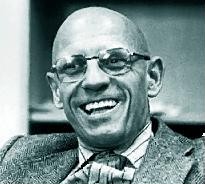
Michel Foucault Posted by Hello

Discipline and Punish: The Birth of the Prison, Michel Foucault

Tugrul Keskin


Foucault argues that criminal behavior and activity comes from the increase in surveillance on members of society, and the increase in coercive (forced) discipline. In other words, illegal activity is being based on very subtle forms of criminal behavior that has been defined as 'criminal' through this newly strengthened surveillance and discipline. The activity is not in and of itself criminal, except as it is defined to be so. The definition of criminal activities are created in the context of a social system in which society is under surveillance and discipline not just in the case of criminal prosecution and incarceration, but in every aspect of social life. According to Foucalt, modern society itself is caught in prison, because every single behavior of human being is in watched by the system. This new societal environment has influenced human behavior and has social and political ramifications in the context of discipline and punishment.

According to Foucault, more discipline in a society creates more delinquency. He furthermore discusses that in order to control society, the political power elite uses discipline, and the disciplinary environment that is created by power elite produces obedient masses. Again, justice is regarded as distinct from punishment; punishment and discipline are mechanisms that are independent from justice and used more for purposes of societal control. Justice does not justify crime, but it does serve more or less as a tool of imaginary punishment that does not match the crime that is committed. Therefore, justice has a new meaning in Foucault’s understanding of it. In discipline and punishment, justice is not the main achievement; instead, control of society is the key element in the penal system.

In Foucault’s view, discipline and punishment are not used for a main goal for justice. In this sense of punishment, the core argument of Foucault is that control over society is the vital element of punishment and discipline. Therefore, he later discusses the torture to body has transformed into torture to soul in 19 and 20th century. Foucault also puts power in the center of discipline and punishment, because these terms are the tool of power. Power is exercised through the justice system. The different forms of this power can be observed in diverse aspects of social life and its institutions.

The legitimation of power that takes place through the penal system is a new phenomenon in which the social and political environment is constructed through the use of punishment and discipline. Therefore, the new system of punishment has more complex power relations. Repression, rejection, exclusion, and marginalization are some of the different forms of punishment used in modern society. However, these new methods of punishment are not enough to describe the discourse of punishment in the modern sense. Foucault argues that this type of increase in discipline will result in an increase in the incarceration of the masses, and this actually results in the incarceration of an entire society. We can see Foucault’s understanding of modern society is described in his references to the carceral city. In this way, he basically distinguishes between the old penal systems, in which the body was the center of punishment, and “the carceral city, with its imaginary geo-politics, is governed by quite different principles.” (Foucault, 307)

It seems to be that Foucault sees the system as a machine that operates by itself perfectly, much like forces in nature operate. But on the other hand, if a system works perfectly, there should not be any crime or deviant behavior. Therefore, Foucault does not specify how deviant behavior occurs in modern society. According to him, there is no outside influence on the system. The system is a self-producing machine that basically reproduces itself and has control over society. There are no agents in this social structure, unlike the definition provided by Giddens. According to Foucault, power is the key element of the argument. Accordingly, we try to normalize society and individuals through the market economy, school and penal systems. In the sense of normalization, punishment and discipline are extreme cases in modern society.

My understanding of Foucault is that he sees capitalism as a machine. He also attempts to distinguish himself from Marx and Marxist structuralism. His definition of power is that power is not real, but is more likely to be an imaginary phenomenon. But at the same time, this definition of imaginary power has influenced every aspect of social and political life. The power he describes is very much real, and is used by the power elite similar to the process described by Wright Mills. Foucault claims that our consciousness has changed. He also implies that the target of punishment has transformed from the body to the soul. In modern society, the soul of society is under the control of a machine he refers to as capitalism. However, today the system is more complex than ever and historical processes have acted upon and further strengthened the system/machine. Foucault claims that a person can only be an individual up to a certain level, because after this point, their behavior is under the control of this system.

The establishment of the carceral system is the new form of discipline and punishment. This new process or system is based upon the redefinition of criminal behavior in modern society. This definition describes criminality as the surveillance of an entire society. Exclusion, marginalization, rejection and repression occur in the carceral system. The new system has stronger limitations on human freedom and behavior. It creates artificial identities and defines artificial criminal behaviors. Foucault stresses that there have been enormous changes in the penal system, and that this represents a humanization in the treatment of criminals. His perspective on the normalization of the penal system, from torture of the body to torture of the soul, provides a new system of the rationalization of punishment.
Foucault clearly describes the existence of a resemblance between prisons and modern institutions. “Foucault asks rhetorically, it is surprising that prisons resemble factories, schools, barracks, hospitals, which all resemble prisons? In the end, Foucault sees the development of carceral system in which discipline is transported from the penal institutions to the entire social body.”

Foucault uses the term ‘Panacticon’, that is a technological observation of prisoners. The idea of Panacticon in the modern society involves an observation that there exists an entire society as prison guards that monitor prisoners in cells. Technological advancements maintain an environment in which Panacticon is an imaginary observation for the entire society. Cameras, radars, and metal detectors at Airports are the some of form of Panacticons. The key role of the Panacticon is to control and discipline society. Therefore, according to Foucault, earlier societies had more inherent freedom than modern societies, because every aspect of life is under the control and observation of Panacticon.

In short, according to Foucault, there exist common elements in today’s society to that of the 17 and 18th centuries. Today’s modern societies are under the control and rule of the power elite. Besides the acts of prison sentencing and jail, the individual is controlled in every aspect of his social life; in the school environment, through the work environment and even the football game. He does not pay attention to the role of power elite. Power is instead viewed as an imaginary mechanism that is not used by any group or institution, but is more likely to exist as a self-controlled mechanism. Basically, Foucault disregards the role of the elite in modern society. In his book, Discipline Punishment, Foucault provides an explanation and historical overview of punishment in the context of the power relations that are used to control society.

Monday, March 21, 2005

Interview with Prof. Robert Jensen

By Tugrul Keskin

Robert Jensen is a tenure Professor at University of Texas. He finished his Ph.D. in media law and ethics at the University of Minnesota. Prior to his academic career, he worked as a professional journalist for a decade. In addition to teaching and research, Jensen writes for popular media, both alternative and mainstream. His opinion and analytic pieces on such subjects as foreign policy, politics, and race have appeared in papers around the country. He also is involved in a number of activist groups working against U.S. military and economic domination of the rest of the world. Jensen is the author of Citizens of the Empire: The Struggle to Claim Our Humanity, Freeing the First Amendment: Critical Perspectives on Freedom of Expression, and many other books and articles.

http://uts.cc.utexas.edu/~rjensen/home.htm


Prof. Robert Jensen Posted by Hello


Tugrul Keskin: Do you think US foreign policy toward the Islamic World or the Third World has changed especially after Bush administration came to the White House. Or has US foreign policy never changed and basically has always been like this toward the Third World countries-that reminds me the British colonialist policies in the 18 and 19th century.

Robert Jensen: The broad outlines of U.S. foreign policy since WWII have remained unchanged: A desire to deepen and extend U.S. power around the world, especially in the most strategically crucial regions such as the energy-rich Middle East; always with an eye on derailing the attempts of any Third World society to pursue a course of independent development outside the U.S. sphere; and containing the possibility of challenges to U.S. hegemony from other powerful states. The Bush administration policy is a departure from recent policy in terms of strategy and tactics, and perhaps also in the intensity of ideological fanaticism. The Bush National Security Strategy outlined in 2002 is breathtaking in its assertion of U.S. dominance and rejection of any possible challenge. The post 9/11 attacks on Afghanistan and Iraq show the willingness of the administration to use large-scale violence to achieve that. None of this is unprecedented; all of it is dangerous and disturbing.

Keskin: If the policy has not been different from the past, then who is actually responsible for forming US foreign policy; the past and current administrations, the Pentagon, corporate America, neo-cons, or others?

Jensen: U.S. foreign policy is shaped by a variety of interests: Politicians with certain ideological commitments, military leadership with certain interests in preserving their power, and corporations with the always-central goal of maximizing profit. Those groups are not monolithic. Sometimes they will have conflicts, internally and among the groups. Sometimes ideologically fanatical civilian leadership will want to pursue wars that military leaders don't want (such as a possible U.S. attack on Iran). Sometimes the interests of one sector of the corporate world might clash with another sector. But in general, U.S. foreign policy serves the goal of allowing corporations, primarily U.S.-based corporations, to make the most profit through domination of the Third World and containment of challenges from other power centers (Europe, Japan, China). That means securing markets with the most favorable terms, allowing corporations to exploit labor abroad, and shoring up the dollar.

Keskin: Since the November 2000 election there have been negative changes in the American Universities. Free speech and freedom of thought are ignored; and academicians are frightened to speak out against the anti-democratic political structure. If I remember correctly, you are the first academician to face some difficulties of this kind, and more recently Ward Churchill from the University of Colorado is facing the same type of freedom of speech issues. Could you please tell us about your experience regarding academic ‘freedom’, and do you think that American academia is loosing its values of free speech?

Jensen: After 9/11 I was sharply criticized by administrators at my university. It had no effect on my conduct; I continued to speak out. But it no doubt did scare some people into silence. That's the tactic these days: We have extensive legal guarantees of free speech in the United States, but the people in power try to create a climate of fear to keep people quiet. There are some current threats to the system of tenure in the universities and academic freedom, but most of the threat to free speech is more subtle, in terms of the social pressures.

Keskin: Dr. Jensen, a foremost conservative Pat Buchanan wrote an article, entitled "Whose War," and in the article he criticizes the Bush administration. What are the main differences between the neoconservatives such as Wolfowitz and Perle; and conservatives such as Pat Buchanan? What is happening in the conservative ideology?

Jensen: Pat Buchanan is often referred to as a "paleo-conservative," someone harking back to an earlier view of the world that is isolationist and reactionary. Buchanan opposed the Iraq war, but on very different grounds than leftists. His disagreements with the neoconservatives are mostly about tactics and strategy. Both groups agree that the U.S. should dominate the world, though they disagree about how to go about it.

Keskin: What do you think about how the US media has handled or covered the Iraq War?

Jensen: In a word, it is horrible, this is a failure of US journalism. Before, during and after the war, mainstream commercial journalists have failed to provide the critical analysis, independent reporting, and the diverse range of opinions necessary for the American public to evaluate the Bush administration’s claims about the war. After the hunt for Iraq's weapons of mass destruction came up empty, Bush was forced to appoint a commission to study the "intelligence failures" in the run-up to war. As journalists pursued that story, some argued that the press had finally stepped into its role as the proverbial watchdog on power. But journalists continue to allow officials to define and shape the news in ways that keep US readers and viewers in the dark, just as they were before and during the war. The paradox of US journalism is that a press which operates free of direct governmental control produces news that routinely reproduces the conventional wisdom of a narrow power elite. Coverage of the Iraq war highlights two of the key reasons. First, the majority of US journalists are unable to transcend the limiting effects of the ideology of American exceptionalism - the notion that the United States is the ultimate embodiment of democracy and goes forward in the world as a benevolent champion of freedom, not as another great power looking to expand its influence around the world. Uncritical acceptance of this ideology permeates mainstream US coverage; even 'critical' reporting usually tends to take it as a given. Second, journalists are trapped by the routines of "objective journalism", the most central of which is the slavish reliance on "official sources". Unfortunately, most US journalists continue to read from the Bush administration’s script.